Alan Hale, Jr., known to most as the Skipper from the television series, "Gilligan's Island," died twenty years ago today, on January 2, 1990. That show originally aired from 1964 to 1967, but I remember it in reruns during the 1980s, two decades after its original run. Rest in Peace.
Saturday, January 2, 2010
Resquiat in pacem: Alan Hale, Jr. (1918 - 1990)
Alan Hale, Jr., known to most as the Skipper from the television series, "Gilligan's Island," died twenty years ago today, on January 2, 1990. That show originally aired from 1964 to 1967, but I remember it in reruns during the 1980s, two decades after its original run. Rest in Peace.
Friday, January 1, 2010
The New Year's Day Mix

Ah, the New Year, and its accompanying portents of doom. I was amused enough by my recently unearthed Christmas playlist to attempt one for the occasion of the New Year. Here goes:
1. "A Long December" - Counting Crows
2. "New Year" - The Breeders
3. "New Year's Day" - Caesars
4. "Last Year's Man" - Leonard Cohen
5. "Year of the Tiger" - Sufjan Stevens
6. "1999" - Prince
7. "In the New Year" - The Walkmen
8. "This Will Be My Year" - Semisonic
9. "Next Year" - Foo Fighters
10. "The New Year" - Death Cab for Cutie
11. "New Year's Prayer" - Jeff Buckley
12. "Blankest Year" - Nada Surf
13. "New Year's Resolution" - Roy Milton and His Solid Senders
14. "Doomsday" - Elvis Perkins in Dearland
15. "The Holiday Song" - Pixies
16. "December 1999" - Jolie Holland
17. "New Year's Eve" - The Walkmen
18. "Forgotten Years - Midnight Oil
19. "New Year's Day (USA Remix)" - U2
20. "It Was A Very Good Year" - The Flaming Lips
The two songs referencing 1999 recognize the tenth anniversary of the last New Year's Eve of the 1990s. Ah, Y2K, how far we've come since you loomed over us. To preserve my indie street cred, I had to use The Flaming Lips version of "It Was A Very Good Year," rather than the more recognizable, far superior version by Frank Sinatra. "Year of the Tiger" by Sufjan Stevens is appropriate, because 2010 brings with it that year under the Chinese calendar. Including the original version of U2's "New Year's Day" seemed a bit too obvious, so I used the remix from the 1983 "Two Hearts Beat As One" single. Finally, it's interesting to note that both the Christmas mix and the New Year's mix both include not one but two songs by The Walkmen, who evidently like to recognize the holidays on their albums. Finally, for a New Year's Day mix, I was tempted to include the Black Eyed Peas, but I just could not do it. O tempora, o mores.
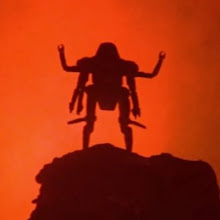
Please take note of my prior New Year's Day entry, posted two years ago today, on January 1, 2008. That post was sufficiently ominous in tone, and of course, 2008 vindicated those early predictions of doom. Speaking of ominous things, I discovered the wonderfully eerie photograph at the top of this page on this January 2007 blog post by Some Audio Guy, author of, oddly enough, the blog called The Ramblings of Some Audio Guy. There is no indication of whether Some Audio Guy actually took the photograph in question, or if he, like me, scoured the Internets to find a sufficiently macabre image to complement the tone of the post in question.
2010 - The Year We Make Contact?
Twenty five years ago, the poster for the 1984 film, 2010 (based on the novel, 2010: Odyssey Two, by Arthur C. Clarke), advised cinema goers that "[i]n the very near future a small group of Americans and Russians set out on the greatest adventure of them all . . . to see if there is life beyond the stars." That "very near future" has now arrived. What's in store for us this year?
Welcome, 2010.
"And it's been a long December, and there's reason to believeMaybe this year will be better than the last."
Thursday, December 31, 2009
Happy New Year.
Best Music of 2000 - 2009
"Everything In Its Right Place," Radiohead (2000)
"Moment in the Sun," Clem Snide (2001)
"The Golden Age," Beck (2002)
"Maps," Yeah Yeah Yeahs (2003)
"Neighborhood #1 (Tunnels)," Arcade Fire (2004)
"Mr. November," The National (2005)
"O Mary Don't You Weep," Bruce Springsteen (2006)
"Nude," Radiohead and "Intervention," Arcade Fire (2007)
"Bible Days," Jessica Lea Mayfield and "Skinny Love," Bon Iver (2008)
"She Watches Over Me," Elvis Perkins (2009)
You'll note that I even made a change or two from My Life's Playlist, posted in December 2007, which features one song for every year I've lived. Honorable mention would have to go to Ray LaMontagne, whose 2004 album, Trouble, and 2006 album, Till The Sun Turns Black, were phenomenal, but songs from which did not make the list. Sorry, Ray.
Best Music of '09
Far be it from me to declare these the "best" songs of 2009, but they certainly are some of my favorites from this year. I limited the list to 22 selections, if only because the combined length of these songs would fill a CD were I making a mix CD (had I anyone to make a mix CD for).
Here goes:
1. "Marrow" - St. Vincent
2. "Blood Bank" - Bon Iver
3. "All for the Best" - Thom Yorke
4. "The Right" - Lou Barlow
5. "Rave On" - M. Ward
6. " I And Love And You" - The Avett Brothers
7. "Heads Will Roll" - Yeah Yeah Yeahs
8. "Last Dance" - The Raveonettes
9. When the Night Comes - Dan Auerbach
10. "People Got A Lotta Nerve" - Neko Case
11. "Sing Sang Sung" - Air
12. "No Line On The Horizon" - U2
13. "Singing the Joy To The World" - Fruit Bats
14. "Words of Love" - Jessica Lea Mayfield
15. "She Watches Over Me" - Elvis Perkins
16. "Daniel" - Bat for Lashes
17. "While You Wait For The Others" - Grizzly Bear
18. "Velvet" - The Big Pink
19. "All Is Love" - Karen O and The Kids
20. "You and I" - Wilco
21. "1901" - Phoenix
22. "Black Cloud" - Morrissey
Interestingly, fifty years after the death of Buddy Holly, two covers of his songs (by M. Ward and Jessica Lea Mayfield) make the list. Technically, Yeah Yeah Yeahs appear twice, first with its "Heads Will Roll" from the It's Blitz album, and again in the form of Karen O and The Kids (which included both of Ms. O's bandmates from the YYYs). Morrissey earns a spot on the list, despite the fact that (a) his best work remains 1986's The Queen Is Dead (with the Smiths, of course) and (b) he is an insufferably pretentious tool. Thom Yorke, who would of course make the list, actually had three new tracks out this year, the other two being "Hearing Damage" from the New Moon soundtrack and Radiohead's "Harry Patch (In Memory Of)," released online. Really, Muse would have, should have made the list, but Glenn Beck's professed fondness for "Uprising," the first track off their 2009 album, "The Resistance," killed it for me. Alas.
Wednesday, December 30, 2009
The Time Tunnel v. Sherlock Holmes
Back in February of 2006, Frank Decaro of The New York Times reported on the DVD release of the 1960s sci-fi television show "The Time Tunnel" (a series about which I know little, though I suspect that it has not aged well.). In profiling the series, Decaro described the philosophy of the show's creator and producer, Irwin Allen, which pretty well encapsulates that of director Guy Ritchie, whose new Sherlock Holmes flick starring Robert Downey, Jr. is now in theatres.Decaro writes:
Later known as the master of such disaster films as "The Poseidon Adventure" and "The Towering Inferno," Mr. Allen infamously considered his TV series "running and jumping" shows. To his mind, the stories didn't need to make sense as long as those screens were packed with action, smoke and flying sparks. "Time Tunnel" embraced substantially less science and considerably more fiction than its competition that season, NBC's "Star Trek."(Emphasis added).
I saw Sherlock Holmes on Christmas Day, its opening day, and I was underwhelmed. Although there has been some critical commentary noting the chemistry between Holmes (Robert Downey, Jr.) and Watson (Jude Law), I saw nothing of the sort of screen. We are thrown into the dying days of the detective pair's working relationship, and action flicks with lazy back stories are dangerous animals, indeed. (To boot, we are instructed to take note of the past relationship between Holmes and Irene Dalton (the vacant Rachel McAdams), although there is little interesting there, either.). Essentially, what Ritchie has produced is a steam punk procedural cop show, a CSI: 1891 London, in which Holmes and Watson solve one relatively boring case - which may or may not have supernatural implications - over the course of two hours. There are the requisite number of explosions and fisticuffs for a movie of this sort, but nothing visually innovative. Ritchie throws at the viewer the action, smoke, and flying sparks, thrown in with some soot to suit the era, just as Irwin Allen would have done. Downey is given the unenviable task of carrying the film and distracting the viewers from the various plot holes and inconsistencies in the screenplay. (Was the thinking that because he was so fun to watch in Iron Man that he could play any quirky anti-hero and audiences will show up to the theatre in droves?) Big budget Hollywood films based upon larger than life characters should be a joy to watch, not an exhausting afternoon of forgiving narrative mistakes and omissions. Yawn.
Of course, I was greatly amused to see one reviewer on Twitter, David Hogarty a/k/a The Lexiphane, remark that Downey's portrayal "owe[d] more to Bill Pullman's Daryl Zero in 'The Zero Effect' than Basil Rathbone's Sherlock Holmes." He's got a point there.
Tuesday, December 29, 2009
El DeBarge - The Ultimate Collection?

Question One: Is El DeBarge really the type of performer who deserves a compilation billed as an "Ultimate Collection"? (Wow; the album even has its own Wikipedia entry.). Question Two: What songs would need to be missing from this disc for it to lose its status as "ultimate"? Question Three: Surely, if "Who's Johnny" was not included, the record could not maintain this distinction? Question Four: How can the compilation truly be considered "ultimate" without "Rhythm of the Night," the biggest hit for DeBarge, the group in which El DeBarge once sang with his siblings? Question Five: How might the record buying public resolve this dilemma?
The answer: Purchase both the El DeBarge Ultimate Collection, and the entirely separate and distinct Ultimate Collection by DeBarge, the band of which El DeBarge was once a member.

Problem solved.
Monday, December 28, 2009
Resquiat in pacem: Sam Peckinpah (1925 - 1984)
Famed Hollywood director Sam Peckinpah, known as "Bloody Sam" for his violent films of the 1960s and 1970s, died twenty five years ago today, on December 28, 1984. Perhaps his most famous work is 1969's The Wild Bunch, featuring William Holden and Ernest Borgnine in one of the best representatives of the revisionist Western genre. If you've not seen it, do so promptly. Other stellar works include 1975's "The Killer Elite," 1973's "Pat Garrett and Billy the Kid," and the disturbing 1971 film, "Straw Dogs." Most of his work is on DVD, and some, including The Wild Bunch, is now on Blu-Ray. He would not live to see how much of an influence he had on Quentin Tarantino, whose first heist film was released eight years after Peckinpah's death. Tarantino's rise to fame in the early 1990s brought Peckinpah's work to a new generation of eyes, including many who are now making films themselves. Rest in Peace.
Sunday, December 27, 2009
Nostalgia for My Bloody Valentine

The far better nostalgia blog Slicing Up Eyeballs has written about the coming reissues of My Bloody Valentine's albums from days of yore. (That's right, shoegazing fans, you'll have to shell out your hard earned cash yet again in January to obtain these newly remastered versions of records you've probably bought at least twice by now. Maybe even once on cassette.). As I begin the enterprise of this blog anew, I think to myself, my goodness, if only I could have seen the MBV reunion shows back in 2008. That would have been something, no?
Saturday, December 26, 2009
The Christmas Playlist
1. F__k Christmas - Fear
2. Christmas - Beat Happening
3. It's Christmas Time - Yo La Tengo
4. That Was the Worst Christmas Ever - Sufjan Stevens
5. Christmas at the Zoo - The Flaming Lips
6. The Christmas Party - The Walkmen
7. Christmas Song - Mogwai
8. Happy Christmas (War Is Over) - John Lennon
9. Christmas Bop - T. Rex
10. Christmas Card from a Hooker in Minneapolis - Neko Case
11. Christmas - Leona Naess
12. Merry Christmas from the Family (Live) - Robert Earl Keen
13. No Christmas While I'm Talking - The Walkmen
14. A Change at Christmas (Say It Isn't So) - The Flaming Lips
15. What Child Is This Anyway - Sufjan Stevens
16. Christmas Steps - Mogwai
Please know that I listened to it yesterday, on our most commercial of holidays.
Friday, December 25, 2009
Christmas with the Devil
Judith Owen and Harry Shearer perform the immortal Spinal Tap classic holiday tune, "Christmas with the Devil." Shearer, of course, plays in Spinal Tap under the name Derek Smalls. The original version of the song appeared on Spinal Tap's 1992 album, "Break Like The Wind."
Happy holidays from Chronological Snobbery.
So This is Christmas II

SAD CLOWN CHRISTMAS 2007: Two years ago today, Christmas Day 2007, Horus Kemwer posted on his blog, Against the Modern World, an entry that one commenter described as "perhaps the greatest blog entry [the] site [had] ever seen." See it here.
SO THIS IS CHRISTMAS II: Also two years ago, today, this blog was in its infancy and it had not yet lapsed into the lengthy coma that has characterized its last 18 months. But on that day, Christmas Day 2007, this site explored the immortal punk band, Fear, and its 46 second song, "F_ck Christmas." Ah, Christmas. You can access that 2007 post here.
LEAGUE OF MELBOTIS CHRISTMAS POSTS: As previously reported, the six year old blog, The League of Melbotis, closed its doors last week, just a few days before Christmas. If you feel you must recognize the yuletide season (or if you are being forced to against your will), then you can peruse his Christmas posts from these years: 2003, 2004, 2005, 2006, 2007, 2008, and 2009. Alas, readers of The League of Melbotis will not get to see a Christmas 2010 post.
Thursday, December 24, 2009
David Lee Roth's "A Little Ain't Enough" (1991)

It is possible to calculate the exact moment in the career of David Lee Roth when he sank from puerile hard rock showman to utterly irrelevant self parody. It was January of 1991, when his new album, A Little Ain't Enough, hit record stores. Perhaps it's unfair to opine that the record suggests a total lack of self awareness; perhaps Roth, even at his most silly, knew exactly what he was and how he was to be perceived by the ages. But it is startling to note that this record, released in the first month of 1991, arrived only eight months before Nirvana's Nevermind. According to Wikipedia, the video for the title track was banned from MTV, but nearly 19 years later, surely no one remembers that fact, or much else, about this record.
By 1991, six years had passed since Roth had left the mighty hard rock outfit, Van Halen. But even after that, he showed some promise as a rock star. In the mid to late 1980s, he had pieced together a respectable hard rock band, with guitarist Steve Vai and bassist Billy Sheehan, (both of whom played with Roth on his 1986 album, Eat 'Em and Smile, as well as its 1988 follow-up, Skyscraper). But by 1991, Vai and Sheehan were no longer a part of Roth's band, and neither appeared on this, his third solo record (his fourth, actually, if you count the 1985 EP, Crazy from the Heat, which for these purposes, we shall not).
On paper, A Little Ain't Enough might have seemed like a good idea when it was planned and recorded in 1990. In that year, after all, heavy metal and hard rock were still dominating both the airwaves and MTV, and few foresaw the rise of grunge. Produced by Bob Rock (who had produced two popular 1989 albums, Motley Crue's Dr. Feelgood and the Cult's Sonic Temple, and who would later produce Metallica's 1991 self tittled album, to be released in August of 1991), and featuring up and coming, but ultimately ill-fated, hard rock guitarist Jason Becker, there might have been at least some reason to be optimistic. But in the end, it was Roth's last attempt at relevance, and it failed, in part, because 1991 was, as they say, the year punk broke.
Listening to this record in 2009 is like watching awful exploitation flicks from the 1970s; it's difficult to look away at something that is so representative of a dying genre. Certainly, it is characterized by the excess of hard rock, with loud riffs, huge amps, and, of all things, horns. Some of the songs remain catchy, but they can only be the guiltiest of guilty pleasures.
The Internets alert me that there were three singles from the album that charted, those being "A Lil Ain't Enough" (which can't really be called the title track if one word is spelled differently), "Sensible Shoes," and "Tell the Truth," but I can only recall the first two. Surely only the most devout fans of Roth can identify anything he did after 1991 (with the possible exception of the two new tracks he contributed to the Van Halen greatest hits album in 1996). And so it was.
A sad footnote: Becker, the young guitarist, would be diagnosed with Lou Gehrig's disease shortly after joining Roth's band and was unable to tour in support of the album.
Wednesday, December 23, 2009
Resquiat in pacem: The League of Melbotis (2003-2009)

From 2003 to 2009, the League of Melbotis offered commentary on popular culture, music, comic books, and even, occasionally, the social issues of the day. Its author retired this past week, and thankfully, he elected to leave the site's seven year archive online. It was a good run, and that blog shall be missed.
Monday, May 18, 2009
Bruce Springsteen - Streets of Philadelphia Single (1994)

This single for Bruce Springsteen's "Streets of Philadelphia," promoted as featuring "Music from the Motion Picture," features the studio version of that song and three live performances from his 1992 appearance on MTV. Although the film Philadelphia was released in late 1993 (as was the official soundtrack), the Springsteen single was not released until February of 1994.
The track list is as follows:
1. Streets of Philadelphia
2. If I Should Fall Behind (Live)
3. Growing Up (Live)
4. Light of Day (Live)
The three live tracks were recorded on September 22, 1992. Of these, only two were made available on his In Concert/MTV Plugged disc, while the absent performance ("Growing Up") was available on the VHS and DVD releases of that concert. The studio version of "Philadelphia" would appear a year later on Springsteen's Greatest Hits album, released on February 27, 1995.
Most of the concert is available on YouTube:
Above: Springsteen performs "Growing Up" in 1992 on MTV.
Above: Springsteen performs "Light of Day" in 1992 on MTV.
Above: Springsteen performs "Streets of Philadelphia" in 1994 at the Oscars.
Monday, May 12, 2008
The Purpose of Sid Vicious (And What Might Have Been)
This past Saturday, May 10, would have been the fifty first birthday of the late punk rocker Sid Vicious, had he, of course, made it past 1979. Imagining Vicious, who never saw his twenty-second birthday, as a middle aged man is difficult, if not impossible. Surely, though, he would have devolved into self parody sometime in the mid-to-late 1980s, fallen into relative obscurity in the 1990s, and then been resurrected anew in the 2000s with his contributions to the various oral histories of the early days of punk that have been published of late. Or would he have overdosed a short time later, his assigned fate merely been postponed? More likely, though, he would have spent a substantial number of those years in prison for the October 1978 murder of his girlfriend, Nancy Spungen. (Though his friends insist that he was incapable of murder, a jury of non-punks may have found him guilty based on the evidence.).
He was not a founding member of the Sex Pistols but became its bassist when Glen Matlock left the band in 1977. (Matlock went on to form The Rich Kids, whose records are difficult to find in 2008.). Although an untalented musical hack, Vicious became the "look" of punk and was thus excused for his inability to play his instrument and lack of talent. (It is said that Vicious was chosen for the group solely for his image, which purportedly defined the burgeoning punk "movement" and effectively mimicked the look of Richard Hell, who actually could play).
That Vicious covered "My Way" somewhere along the way is well known (and his version was itself covered by a young Gary Oldman in Alex Cox's 1986 film Sid and Nancy). Sid's version appears on Sid Sings, his only solo album, which was released almost a year after his death. Preceding the studio recording is live crowd noise through which you can hear a number of specific comments and heckles, including that of a young woman who yells to Vicious, "You're a poseur!" The identity of that young woman is most likely lost to history, although she could not be more correct in her assessment. He could not play his instrument, nor could he sing.
The question: Would he be so revered today if we had all saw him age, and had he lived and ultimately escaped his legal difficulties, would he have ultimately learned to play the bass?
Monday, March 24, 2008
The Deaths of Robert Preston and Dean Paul Martin
Did you know that last week marked the twenty-first anniversary of the death of not one but two celebrities of whom I was quite fond in the 1980s? On March 21, 1987, both Robert Preston and Dean Paul Martin died.
Most people my age know Preston from his role as Centauri in 1984's The Last Starfighter. I think I saw that film at least twice at the theatres that year and endlessly thereafter on premium cable. If you haven't heard of that film, you were not an adolescent boy in the 1980s. It is the story of a young man who, by scoring very, very well on a video game (called The Last Starfighter, of course), catches the eye of a extraterrestrial military recruiter, played by Preston. Preston, essentially, plays himself. He is much more famous for his role as Prof. Harold Hill in the stage and film adaptation of The Music Man. Born in 1918, he died of lung cancer in his late 60s. I actually remember hearing the news of his death. So often, when you are young, celebrity deaths are meaningless to you, because you don't know the work of the celebrities who are old enough to be passing away. (I suppose this is why the death of George Reeves so affected the youth of American back in the late 1950s.). But I knew Preston from both films I mentioned above, both of which my family had taped off of television and watched often.
Martin was the son of the famous singer, Dean Martin, and he was only a few years older than I am now when he died. He had a brief musical career, but I knew him for something far different: he was the lead in the 1980s television show, The Misfits of Science. Martin was the affable, slightly goofy ringleader of the self-described Misfits, a group composed of people each with his or her own paranormal power. Think of it as a campy precursor to Tim Kring's Heroes. To modern television viewers, that program is the answer to the trivia question, "What was Courteney Cox's first television show?" They reran the show on the Sci Fi Network sometime in the mid to late 1990s, and I was embarrassed to have ever been fond of it. It featured Max Wright, for goodness sake. But back in the mid-1980s, when it aired, I loved it. I have a vivid memory of leaving school one day and being excited that it was to air that night. Yikes.
Martin, who was in the National Guard, died in a plane crash. He was married to the very beautiful Oliva Hussey, who you will know as the lovely young girl who played Juliet in the 1968 cinematic version of Shakespeare's Romeo and Juliet. You probably watched a tape of this in your high school English class and were disappointed (maybe) when the teacher had to fast forward through the brief nude scenes.
From what I have read, Dean Martin never recovered from his son's tragic death. I don't remember hearing of his untimely passing until a number of years later, during the early days of the Internet when I did a pre-Google search engine search on the fateful television series.
Resquiat in Pace.
Monday, March 3, 2008
Living with the Dead #1, #2, and #3 (Dark Horse Comics)
"Hold on . . . you're surrounded by about a zillion blood-sucking, brain-eating, friggin' walking-dead zombies and you don't like to be around guns?" - Betty Davis, to Whip and Straw, fellow survivors in the aftermath of the zombie apocalypse, in Living with the Dead #2 (Dark Horse Comics, Issue Date: November 2007).Published by Dark Horse Comics, the series is written by Mike Richardson, with art by Ben Stenbeck, letters by Clem Robins, cover art by Richard Corben, cover color by Dave Stewart, design by Kristal Hennes, and edited by Scott Allie, the three issue Living with the Dead limited series is yet another attempt by an indie comic publisher to milk the zombie genre. So often has this well been revisited that its novelty not only wanes, but congeals. In perpetrating this narrative, writer Richardson tells the tale of Whip and Straw, two lunkheads whose prospects in life were no doubt elevated by the end of the world. In their post-apocalyptic metropolis, they visit the local mall and take to their city rooftop to perform as Bucktoof, the last remaining band in the city. (Interestingly, Whip and Straw's names are not provided at all in the first issue of the series, a careless omission indeed in the grand scheme of things.).
In a city infested with zombies, Whip and Straw have learned to assimilate. When venturing out into the city by day, they wear makeshift hockey masks and act as if they too are undead. This tactic fools the teeming masses of walked dead, and the creators of the series have attempted to capitalize on this plot point by including a "zombie survival kit" with each of the three issues of the series. The kit, which is a paper hockey mask one can cut from the centerfold of the comic, is accompanied by a legal disclaimer on its use:Warning: Dark Horse Comics takes no responsibility, and makes no guarantee that this mask will save you from an attack of the living dead. Furthermore, wearing a mask does not guarantee safe passage through zombie-infested areas. Please refer to the actions a to the actions taken by the characters in this book, and practice moaning the words "Brain and "Flesh" in public areas. Dark Horse Comics takes no responsibility for the looks you will receive for utilizing your Living Dead Disguise.How clever.
The issue that is to come between these two best friends is not unfamiliar. In establishing this conflict, Richardson recycles a plot not from comics but from sitcoms: Whip and Straw begin to stab each other in the back over issues large and small upon the appearance of Betty Davis, a woman they both come to admire. She is a tattooed hipster and the last remaining female in the city, leading to the tagline of the series: "Two boys, a girl, and seven billion living dead!" Davis is feisty and a bit self absorbed, but she captivates the two male would-be heroes, who rescue her from the mall in which they find her and then attempt to woo her. The two risk their friendship - and each other's lives - just to be in the same room with her. Ultimately, though, upon finally realizing they she is a threat to their cozy existence, they toss her from the rooftop into a pack of zombies, thereby resolving the issue of the day.
The aforementioned comparison to a sitcom is apt not just with respect to the tone of the series, but also its scope. This is not an epic tale of survival, as is The Walking Dead, the fine series by the famed Robert Kirkman. Of course, this series does not aspire to be a such, but its tired premise and overly familiar romantic sub plot are derivative of prior narratives which themselves were derivative of what came before them, as well. The question: To invest the time, energy, and effort required of a three issue comic series these days, why refrain from an attempt at something fearless and inventive? Dark Horse Comics provides no answer to that question.